Virgile Servant Volquin
March 9, 2026
10 min
Video games. Will the European Commission ban virtual currencies? Analysis
3 takeaways:
- The European network of consumer protection authorities (e.g., French DGCCRF) is taking on the current model of monetizing video games through microtransactions. Specific targets include the bundling of virtual currencies, transparency on actual prices, consumers' right of withdrawal, and the protection of minors.
- In Q3 2026, the European Commission will present a draft regulation, the "Digital Fairness Act," which will likely regulate several aspects of the video game industry that are considered addictive. Professional associations of video game publishers and, more broadly, e-commerce, argue that current regulations already cover aggressive commercial practices related to the video game sector and call for better enforcement of existing rules.
- This regulatory approach is highly controversial. On the one hand, the regulator (the European Commission and consumer protection authorities) urge that consumers need to be protected, particularly minors, from predatory commercial practices. On the other hand, the industry highlights the need to avoid the accumulation of similar standards in order to preserve legal certainty. Other arguments could also be raised, such as freedom to set prices, which underpins the monetization model in question, whether in the context of litigation or legislative debates on the Digital Fairness Act.
--------
The Digital Fairness Act is a draft European regulation, still in the preparatory stage, which aims to supplement the current consumer law framework in response to the growing challenges of manipulative online commercial practices and addictive digital products.
Its scope, which is expected to be broad and horizontally targeted at e-commerce, could include provisions specific to the video game sector.
This article aims to present the economic and legal context in which the Digital Fairness Act is being introduced, then to highlight three regulatory issues that will have an impact on the video game industry, namely the regulation of virtual currency bundling, the exercise of the right of withdrawal following the purchase of such currencies, and the default deactivation of certain features that are addictive for minors.
Introduction
The economic model of video games has evolved profoundly over the past two decades, shifting from a traditional one-time purchase model to forms of continuous monetization based on microtransactions. These are defined as a monetization strategy in which consumers purchase digital content (e.g., virtual items, features) in a video game using real currency or virtual in-game currencies.

Since the 2000s, these payments for digital goods or services integrated into the game have become a central component of publishers' revenues, allowing them to smooth out revenue over the lifetime of a title rather than relying solely on initial product sales. This model has gradually supplanted the old strictly "buy-to-play" models. In many video games, microtransactions are structured in two stages: the player first makes a payment in legal tender (euros, dollars, etc.), which is then converted into a virtual currency specific to the game or the publisher's ecosystem (credits, points, tokens).
According to studies, microtransaction-based games have generated more than $76 billion worldwide in 2023, representing a significant share of the sector's profits. A prime example of this transformation is Electronic Arts (EA) and the FIFA/EA Sports FC franchise: microtransactions in Ultimate Team mode are said to have been a major source of revenue, generating approximately $1.71 billion in a single quarter. This type of microtransaction accounts for up to 73% of the group's digital revenue.
The European consumer law framework applicable to video games
This monetization model, while lawful, is nevertheless governed by EU consumer law, known as "horizontal" because it applies to all professionals selling products and/or services to consumers. It mainly consists of the following regulations:
- Directive 2005/29/EC on unfair commercial practices
- Directive 2011/83/EU on consumer rights
- Directive 93/13/EEC on unfair terms in consumer contracts.
Other regulations may apply if their conditions of application are met, such as the Digital Services Regulation (Regulation (EU) 2022/2065), the Digital Markets Regulation (Regulation (EU) 2022/1925) or the GDPR (Regulation (EU) 2016/679), which contain provisions relating to "dark patterns" or consent that may have an impact on how video games are monetized.
This monetization model has attracted the attention of EU consumer associations[1], which in some cases denounce aggressive practices based on "dark patterns," the exploitation of minors' weaknesses, insufficient pre-contractual information, and even failure to respect consumer rights.
In March 2025, the Consumer Protection Network (CPC), made up of national consumer protection authorities, launched an investigation[2] against Star Stable Entertainment, the publisher of an online and mobile app game involving horse breeding and microtransactions.
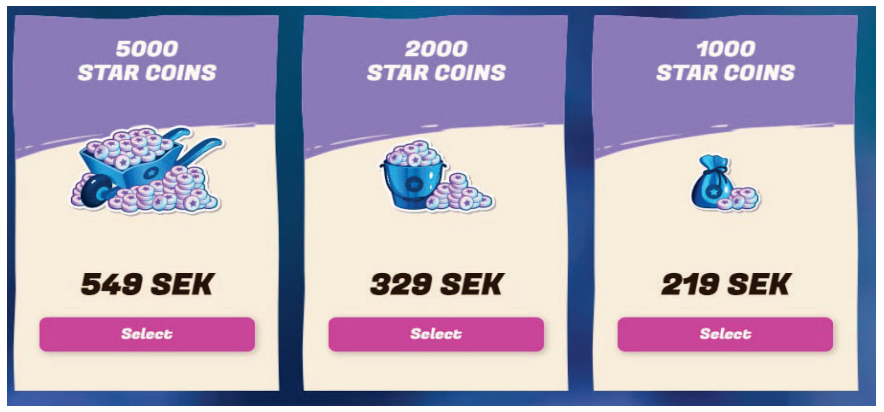
On this occasion, the CPC published a series of seven principles for the marketing of virtual currencies.
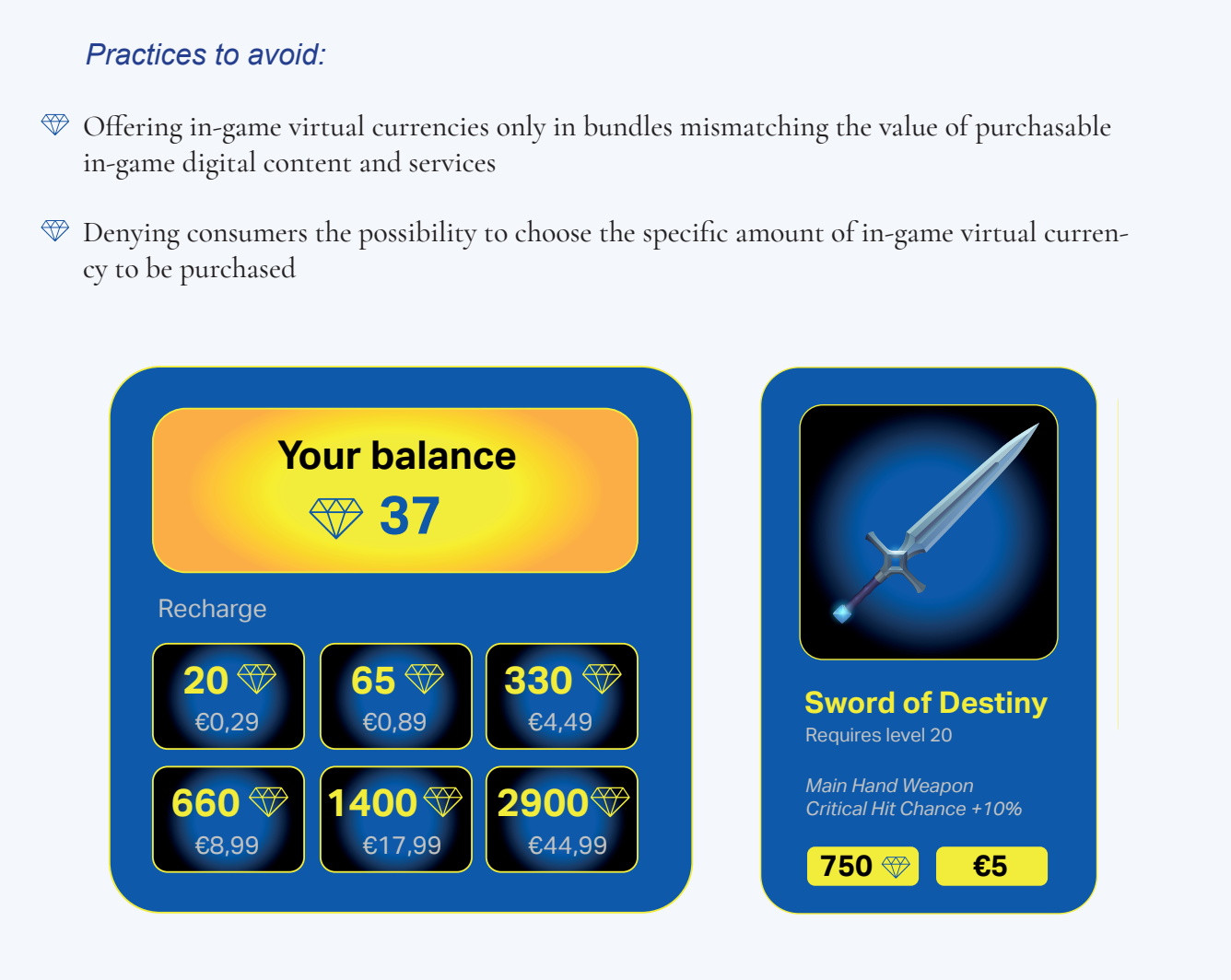
These guidelines set out the doctrine of national consumer protection authorities, based on consumer law. They have been criticized by several professional associations of video game publishers, who see them as an interpretation that goes beyond the law and is highly detrimental to the dynamic economic model of the European video game sector[3].
Furthermore, these guidelines are not binding. They are a document setting out the current position of national consumer protection authorities, which is not binding on video game publishers. However, they foreshadow future investigations and actions by these authorities, and the principles set out therein may therefore be implemented in the context of administrative control and/or sanctioning procedures.
These guidelines were published after the European Union launched a broad process in 2022 to assess the state of consumer law with regard to online commercial practices (the Digital Fitness Check), which led in 2024 to the President of the European Commission, Ursula Von der Leyen, tasked the Commissioner for Democracy, Justice, and the Rule of Law, Michael Mcgrath, with drafting a new regulation, the Digital Fairness Act, for 2026.
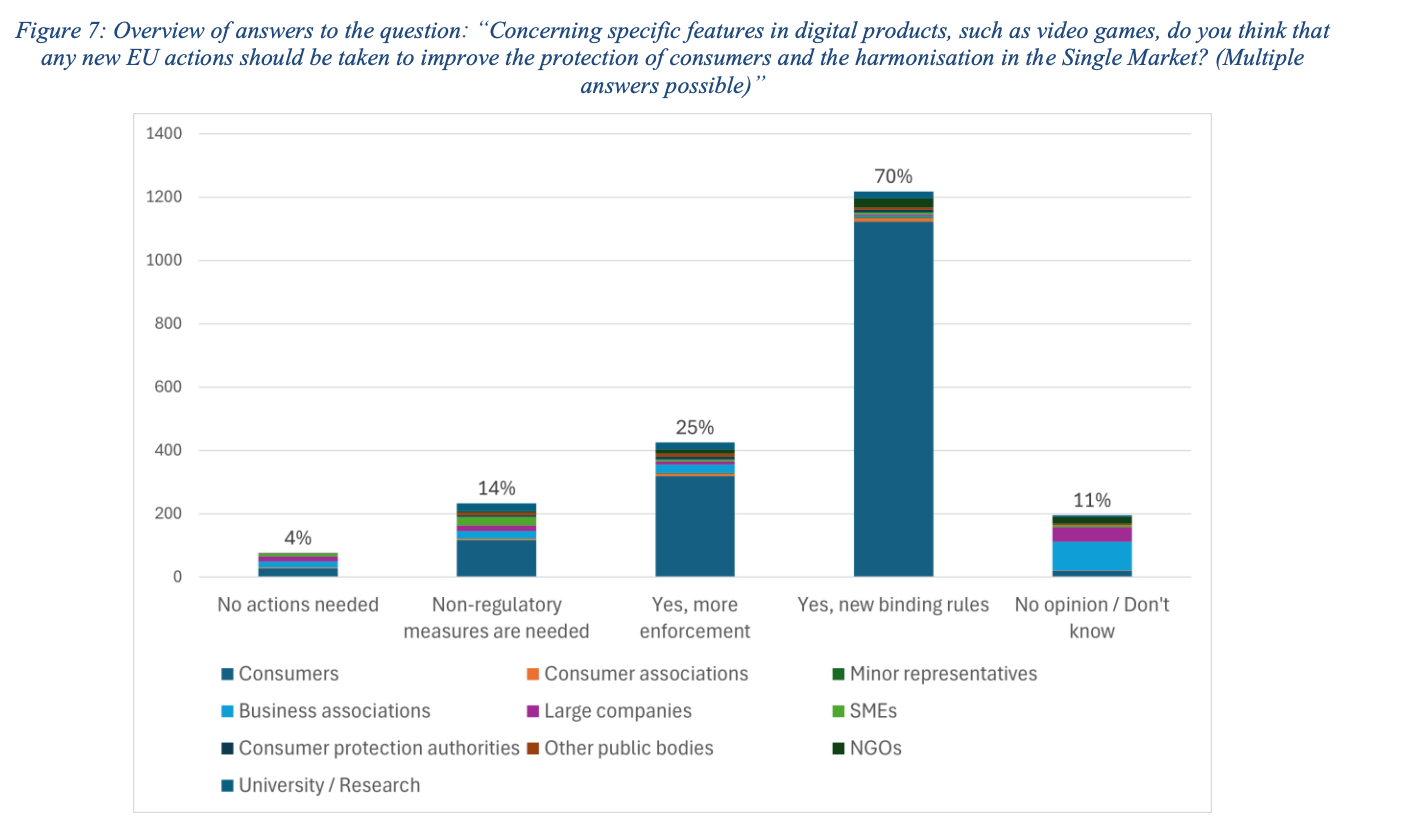
In December 2025, the European Commission published the results of a public consultation on the future Digital Fairness Act, which revealed that a majority of respondents wanted stricter regulation of microtransactions with the introduction of new rules, rather than just better enforcement of existing law.
Towards the end of bundling?
Bundling is a commercial practice that requires certain items and/or features that can be purchased in-game to be bought using virtual currency that can only be purchased with legal tender. It prevents players from purchasing items and/or features directly with the exact amount of virtual currency required. Instead, players are required to purchase bundles (packs) of virtual currency in advance.
This practice was highlighted in the European Commission's Fitness Check (2022), which illustrated that this led to situations where virtual currency remained in the player's account, unusable due to the excessive price of other available items. According to the European Consumer Organization (BEUC)[4], this practice prevents consumers from calculating the price in legal tender when several packs must be purchased and the conversion rate varies depending on the size of the pack. Furthermore, this creates a vicious circle, pushing players to continuously repurchase virtual currency in order to spend their remaining virtual currency.
The CPC Network guidelines also address this issue in principle No. 3, stating that bundling is a practice that forces players to spend more virtual currency than they would like. Therefore, virtual items should be able to be purchased directly using the exact amount of virtual currency required.
However, bundling is used in many other sectors. For example, telecoms, with fixed top-ups, then conversion into services (data/SMS/voice) with sometimes a remainder that is difficult to optimize, in arcades, laundromats, festivals and other cashless events, etc.
The ban on bundling could be considered contrary to the principle of freedom to set prices, which stems from the freedom to conduct a business protected by Article 16 of the Charter of Fundamental Rights of the European Union[5]. As this freedom is not absolute, any restriction must be adequate, proportionate, and necessary to achieve the objective pursued in order to comply with EU law, which could be the subject of litigation in the event of a legal challenge to the CPC network guidelines.
This raises the question of whether this practice will be explicitly regulated or even banned under the future Digital Fairness Act, and what the possible justifications for such regulation might be.
A right of withdrawal for unused virtual currencies?
In principle, consumers have a right of withdrawal for a period of 15 days from the date of purchase of a product. This right does not apply in certain specific cases, in particular when purchasing digital content, where the consumer has consented in advance to waive their right of withdrawal. Market practice therefore consists of linking the purchase of virtual currencies to the player's waiver of their right of withdrawal.
However, the CPC network guidelines specify in principle No. 5 that virtual currencies are not qualified as digital content[6] and that, as a result, players should have the right of withdrawal, allowing them to convert their remaining virtual currency into legal tender within 15 days of purchase.
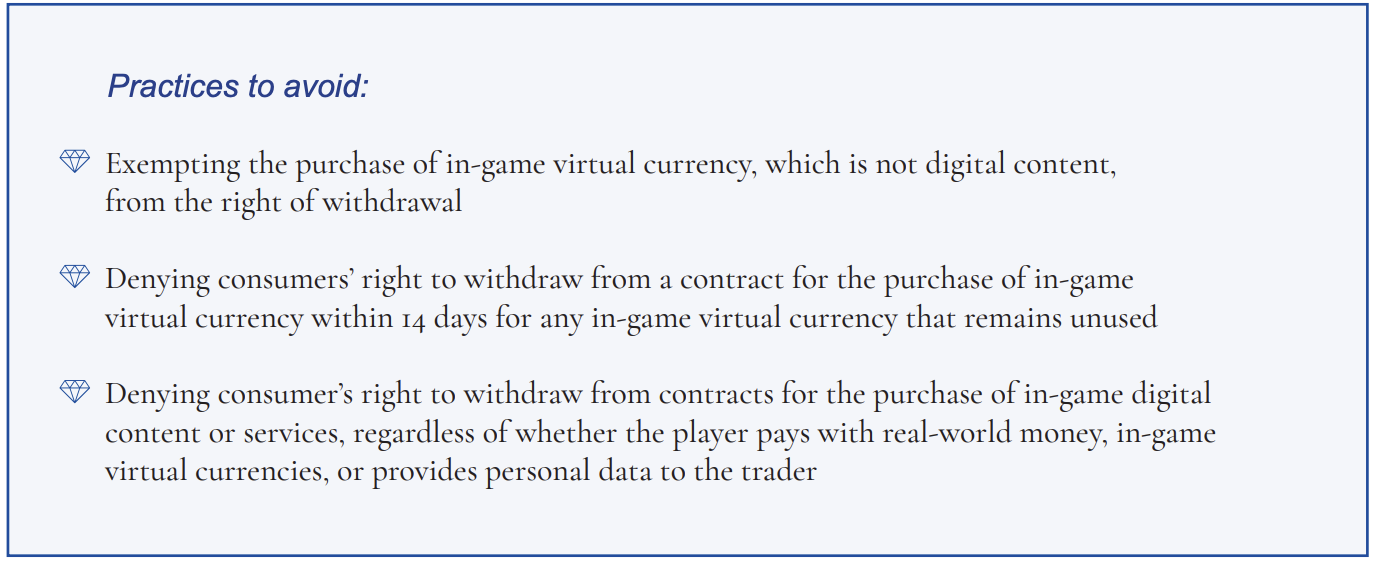
At the same time, the CPC Network does not legally qualify virtual currencies, leaving legal uncertainty as to the regime applicable to them. However, the guidelines seem to lean towards classifying them as digital services, insofar as they specify that the right of withdrawal applies to the portion of digital currency not used by the player.
The Digital Fairness Act could provide an opportunity for the European Commission to definitively clarify the qualification of virtual currencies under Directive (EU) 2019/770 on digital content and services.
In any case, applying a right of withdrawal to the current pricing system for virtual currencies (see previous section on bundling) would have a significant impact on the current business model of video game publishers. Indeed, offering a more favorable conversion rate when purchasing a large amount of virtual currency loses its appeal for the publisher if the consumer is able to obtain a refund for their remaining virtual currency after purchasing an item.
A "default" ban on microtransactions for minors?
Video games are consumed by underage players, who are therefore exposed to the microtransaction business model. With regard to commercial practices targeting this population, which is legally classified as "vulnerable", the CPC network recommends in Principle No. 7 that video game publishers take their vulnerabilities into account both in the design of gameplay and in commercial practices related to virtual currencies.
They emphasize the need not to exploit these vulnerabilities or unfairly influence the economic behavior of players, to make commercial elements integrated into the game clearly identifiable, and to refrain from any direct exhortation to purchase aimed at children. They also encourage the implementation of effective, age-appropriate parental controls, including at the distribution platform level, and the adoption of business models that avoid relying on excessive spending by these vulnerable consumers.
The issue of a complete ban on microtransactions for minors is addressed indirectly in the public consultation on the Digital Fairness Act of 2025, which concludes that 78% of participants are in favor of default deactivation of addictive in-game features, with possible reactivation with parental consent, without specifying which features.
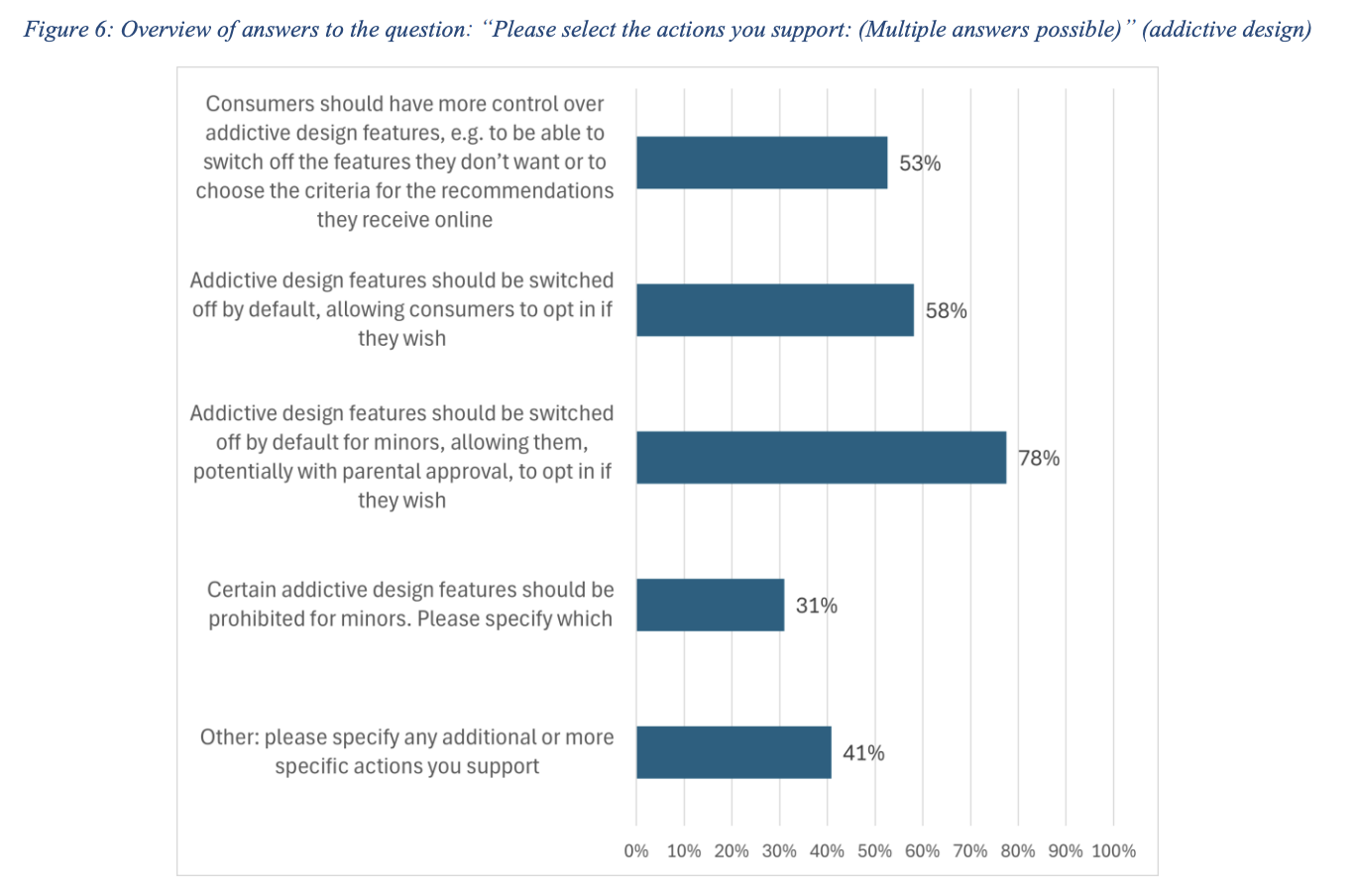
The general nature of the CPC network's guidelines, combined with the lack of specific details on the future direction of the Digital Fairness Act with regard to minors, therefore makes it impossible at this stage to know whether microtransactions should be disabled by default for minors.
------
[1] See the 2025 complaint by the European Consumer Organization against several major publishers, which follows a study on this monetization model published in 2024.
[2] See the joint position adopted by the authorities in this context.
[3] See the position of the EDGF and Ilkka Paananen, CEO of Supercell
[4] See BEUC complaint of 2025, p.25
[5] Regularly referred to by the CJEU, see for example CJEU, December 21, 2021, C-124/20
[6] Within the meaning of Directive (EU) 2019/770
view our expertise